

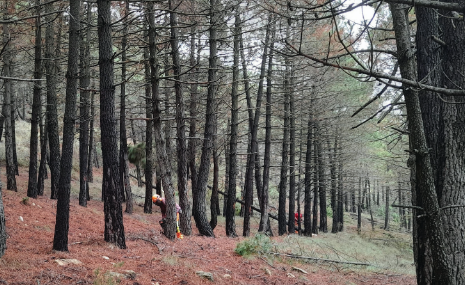
The repopulation of Pinus pinaster covers a very significant area in the Valencian Community (Castellón 35,770 ha, Valencia 99,059 ha and Alicante 54,239 ha). They are greatly affected by climate change, with a shift in their distribution limit due to Pinus halepensis, which is better adapted to hot, dry climates and has greater reproductive success after fires, especially in areas of abandoned crops.
Similar plots have been selected in Alicante, Valencia and Castellón for demonstration activities in the Valencian Community. All are reforested areas of Pinus pinaster that are around 50 years old and, due to their low profitability and the abandonment of rural areas, have not received any intermediate treatments or been exploited.
Summary of the plots selected for the demonstration case in the Valencian Community
| Barracas | Confrides | Alpuente | |
| Province | Castellón | Alicante | Valencia |
| Composition | Pinus pinaster (45%) P sylvestris (21%) P nigra salzmanii (29%) | Pinus pinaster (100%) | Pinus pinaster
(100%) |
| Age (years) | 58 | 45 | 40 |
| Density (trees/ha) | 930 | 590 | 830 |
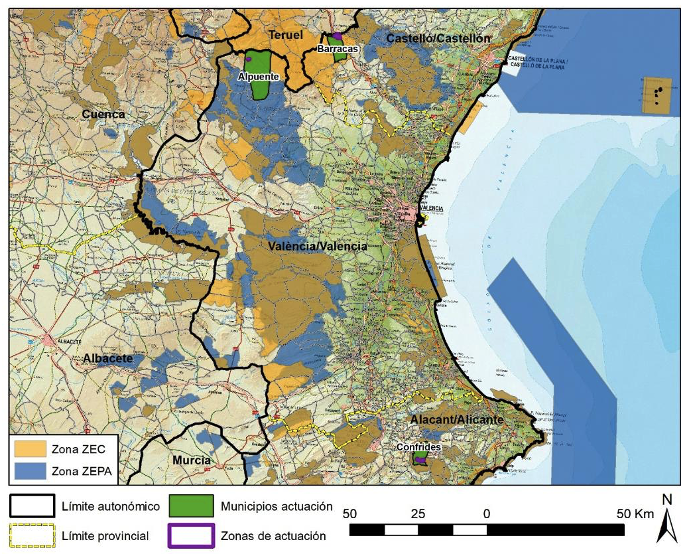
Location of the intervention areas.
Participatory process
In the case of Barracas, as there were several agents involved, informative meetings were held with the aim of involving private landowners. As a result of this process, four private landowners (Monte Las Lomas), in addition to the Barracas Town Council and the Valencian Regional Government itself, joined the project.
In all cases, a communication plan was developed, including various events and actions, to explain the project’s objectives and interventions to local stakeholders, residents, and visitors. Several videos about the project were also recorded and distributed, and informative posters were put up for visitors.
Vulnerability analysis
The drought risk assessment was carried out using the quantitative index developed within the framework of the LIFE RedBosques_Clima project.
The results show greater exposure to drought than the average values for Spanish Pinus pinaster pine forests, which is attributed to the low suitability of the species and geographical exposure, aspects over which there is no capacity for intervention.
However, the vulnerability component in the index is due to aspects of the stand’s structure and species composition, which are amenable to intervention. In all three cases, vulnerability is mainly due to very high tree density and low structural diversity (diameter classes), which determines high vulnerability values.
Vulnerability related to functional diversity is also high, although somewhat better in Barracas, where the canopy is composed of more species and there are more tree species under the pine cover.
Recovery capacity is also a factor in vulnerability, with very low regeneration, somewhat better in forests with oak trees in the understory (as in Barracas).
Objectives
Once the specific aspects of the forest structure that make it most vulnerable to drought had been identified, the objectives of the adaptation measures were defined. In this case, they are similar in the three intervention areas:
- Increase structural heterogeneity
-
- Decrease density and basal area to reduce competition for resources.
- Favour structures with varied diameters and ages.
- Promote natural regeneration by seed of Pinus pinaster to diversify the mass in diameter classes and ages.
- Promote tree species diversity in the canopy
- Favour accompanying species.
In addition to these objectives directly linked to the results of the risk analysis, another related to biodiversity is included:
- Improvement of habitat for vulnerable species
-
- Maintain large dead wood, stumps and other elements that provide shelter and microhabitats.
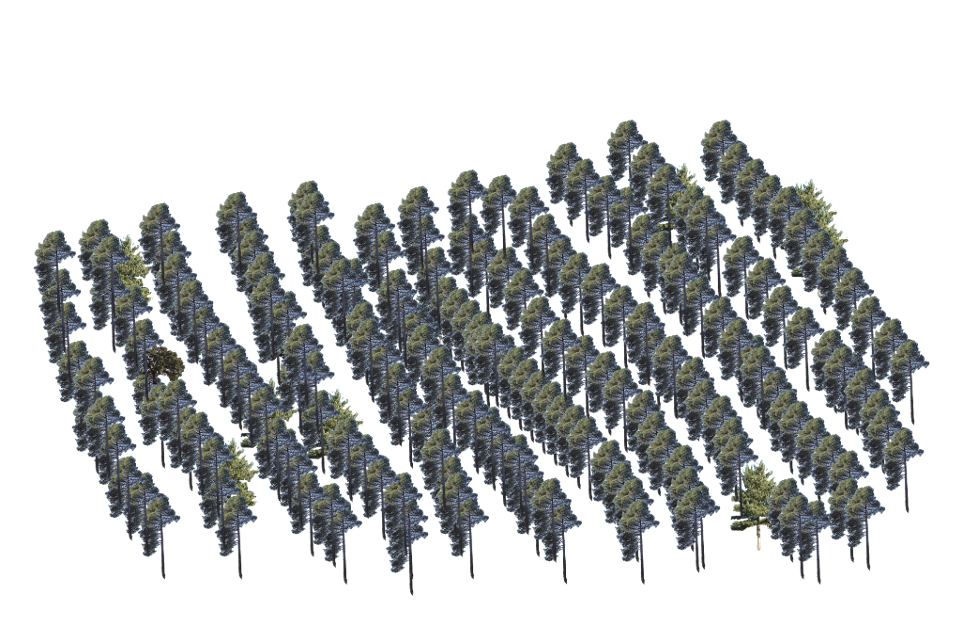
Example of Pinus pinaster reforestation. Current status.
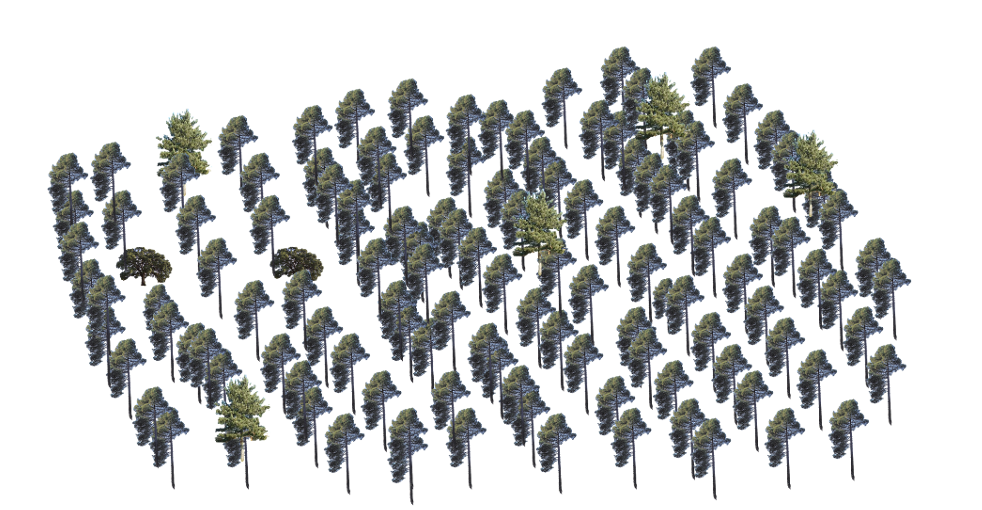
Example of Pinus pinaster reforestation following clearing.
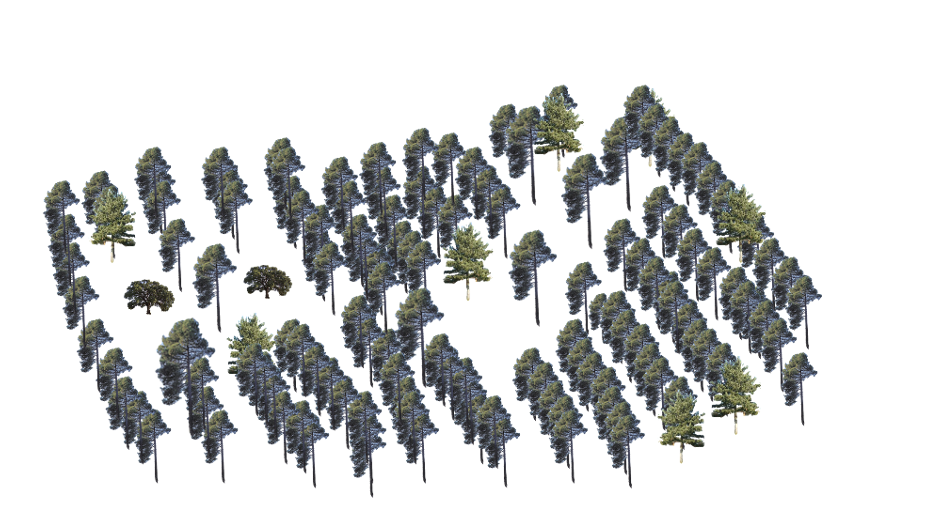
Example of Pinus pinaster reforestation after opening clearings for copses
Implemented actions
The measures implemented in the three selected cases have been clear in terms of copses.
Copses are delimited areas in which tree density is reduced to decrease linearity and promote natural regeneration. This reduction in tree density also decreases competition for water, creating a forest mass that is more resilient to drought.
Within each copse, selective clearing is carried out, leaving representation of all existing diameter classes, including at least half of the dominant and intermediate trees. In addition, future trees are selected at a density of 80 trees/ha. These trees are selected for their greater seed dispersal capacity, better crowns, or their interest for biodiversity (presence of microhabitats).
When marking, the presence of these trees is sought in all copses, and trees that compete with those selected for felling are marked. Within each copse, all broadleaf species (holm oak and gall oak) are respected, and Pinus nigra subsp. nigraor austriaca are preferably cut, respecting the rest of the native pine species (Pinus pinaster, Pinus sylvestris and Pinus nigra subsp. salzmannii).
During the marking of trees, all existing microhabitats or trees that could potentially harbour these microhabitats, such as forked trees, are respected. All existing dead wood is left in place.
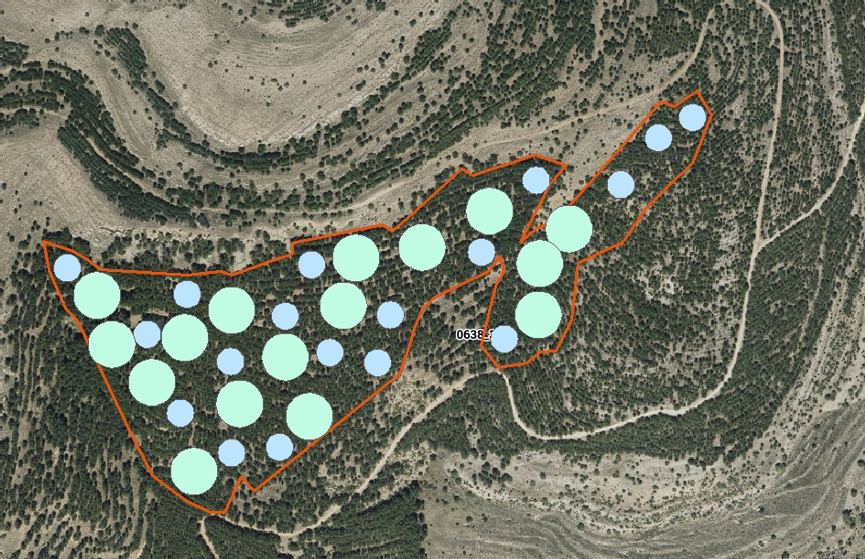
Map showing the location of the copses in one of the areas of action (Alpuente, Valencia)


